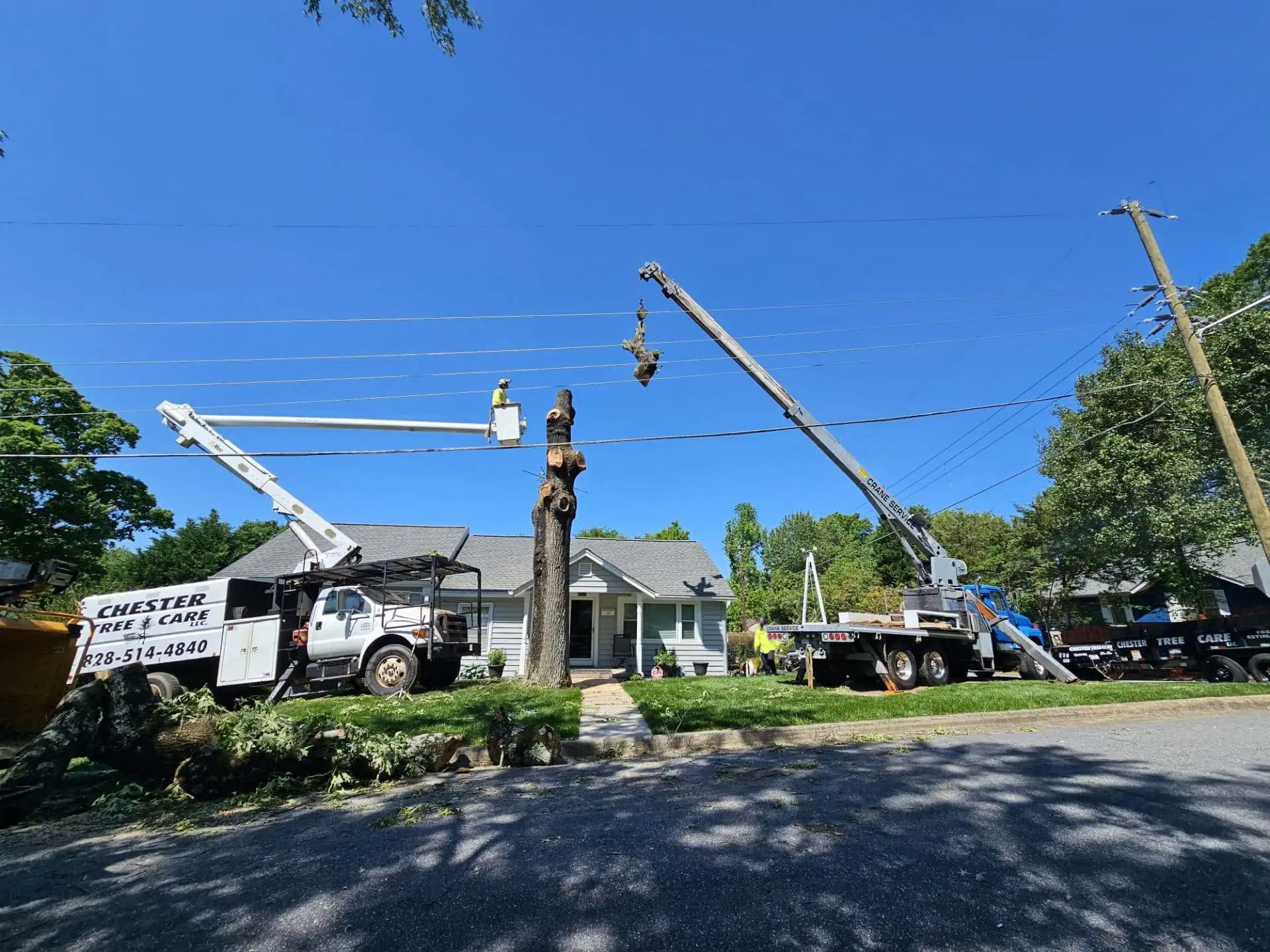
Morganton sits right where the NC foothills start giving way to the Blue Ridge, and that geography matters when it comes to your trees. A lot is going on up here. The older historic neighborhoods close to downtown, places like the streets around the Burke County Courthouse or out toward Bost Road, have canopy trees that have been growing for fifty, sixty, sometimes a hundred years. Those trees are beautiful. They’re also heavy, deep-rooted, and unpredictable when they start to fail.
July in Morganton is not gentle. You know how it goes. The morning starts out hot and thick. By two or three in the afternoon, the sky piles up over the South Mountains. Then the storms hit fast and hard. Pop-up thunderstorms with straight-line winds are a real thing here, and they don’t care how healthy your tree looked last week. One storm cell tracking up the I-40 corridor toward Marion can drop a 70-foot tulip poplar onto a roof before anyone had time to think about calling an arborist.
That’s the thing about tree removal. Most people don’t think about it until something forces the issue. A big limb comes down in the backyard. A storm splits a co-dominant trunk. You notice the bark looks wrong, or the canopy is thinning on one side, or the roots are starting to lift your driveway where it meets the street. These are signs. And in Morganton’s tree species mix, with white oaks, shagbark hickories, and eastern hemlocks all common on residential lots, those signs mean something specific depending on what you’re dealing with.