

When a homeowner asks how long does tree removal take, they often expect a single number that fits every situation. Professional tree removal time varies widely, and that variation can cause frustration when schedules shift or crews need more time than anyone planned for.
That uncertainty becomes more stressful if the tree is near a house, tangled in power lines, or already dead and unstable. Homeowners can feel unsure whether the crew is working efficiently or whether unseen complications are adding hours to the job.
Understanding the most common reasons why some removals take longer helps set realistic expectations and reduces surprises. This article breaks down those factors in clear terms so you can see what influences timing and how professionals approach complex or hazardous jobs.
Tree Size, Condition, and Location Affect Removal Time
Large trees take longer to remove than small trees because more cuts, more careful rigging, and more debris removal are required. A mature tree with a wide canopy and thick trunk requires step-by-step dismantling to control how branches and sections fall, which naturally extends the work time.
The condition of the tree also matters: a rotten trunk, insect damage, or cracks increase the need for safety measures and slower, more deliberate cutting. When a tree is unstable, crews move more cautiously and set up additional rigging or support systems, which adds preparation and execution time.
Local rules, permits, and utility coordination can slow a job even when the physical work seems straightforward. In some neighborhoods you may need approval, a right-of-way clearance, or coordination with the power company, which can push work to specific hours or require standby time while approvals are obtained. For context on local services and how crews handle different situations, learn more about our work with tree removal in Hickory NC.
Season and Tree Species Can Change the Timeline
Seasonal conditions change how crews plan and how fast work can proceed, especially when wet ground, frozen soil, or leaf cover affect access and cleanup. Winter freezes can make staging easier on some sites but can also make rigging less predictable, while wet spring conditions create mud that slows equipment and requires extra site protection.
Some species have wood that breaks unpredictably or holds water, both of which affect cutting strategy and time. Crews who know local tree behavior adjust their techniques accordingly, and that knowledge often increases safety at the cost of a longer removal window.
Late summer and early autumn pruning should be limited because it may stimulate a flush of new growth that fails to harden off before frost or seasonal cooling. This guidance from NC State Extension highlights how timing matters for tree health, and it also reinforces why crews consider seasonality when scheduling removals and pruning.
Limited Access and Equipment Needs Can Add Time
When access is tight, teams must use smaller, slower gear or bring in specialized equipment that takes time to place and operate. Narrow driveways, low fences, steep slopes, and overhead lines all complicate staging, which leads to extra setup and teardown time compared with a wide, open yard.
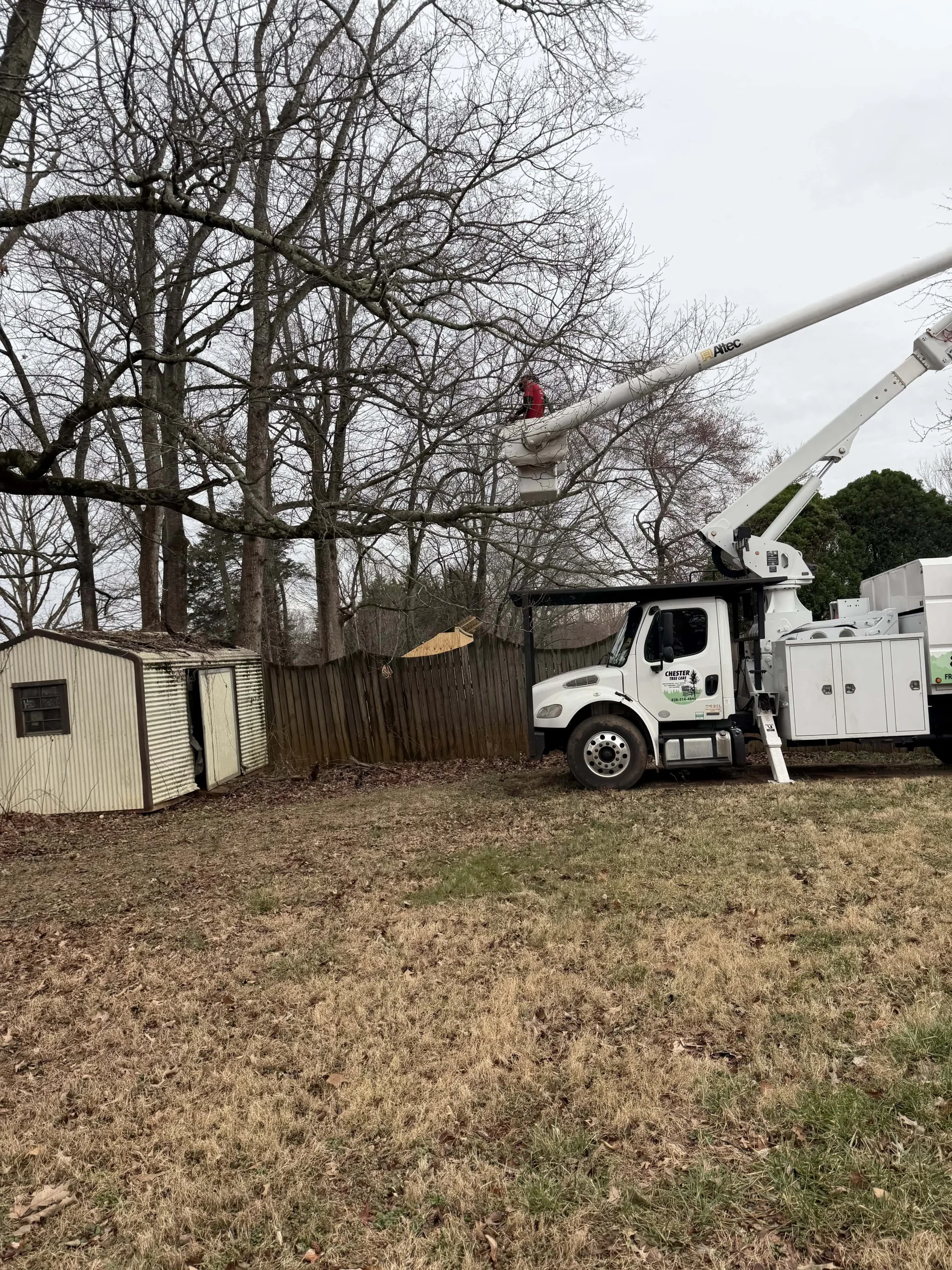
Equipment choice matters: a job that requires a crane, aerial lift, or stump grinder will include the time for delivery, assembly, and safe operation of that gear. Larger machines can speed cutting but require experienced operators and careful placement, especially in residential landscapes.
Power lines and neighboring structures introduce additional steps that lengthen work time because crews must de-energize lines, secure permitting, or set up barrier systems and spotters. Emergency situations may require immediate but cautious removal, which also affects timing; for guidance on those scenarios, crews reference local emergency procedures and resources tied to emergency tree service.
Nearby Structures and Landscaping Can Slow Removal
When a tree stands over a roof, close to a pool, or within a manicured garden, crews use controlled removal techniques that take longer than simple fell-and-haul jobs. Techniques like sectional dismantling, rope-and-block rigging, and slow lowering of heavy limbs protect property but add steps and time to the project.
Protecting mature landscaping, irrigation systems, and hardscape requires planning and often temporary protective measures like plywood pathways or ground mats. Moving slowly and carefully prevents collateral damage, which is why these jobs may stretch into multiple days on larger properties.
Historic trees or those tied to conservation rules may need additional documentation and oversight before work begins, and that administrative time should be part of any estimate. The presence of nests, a need for arborist assessment, or municipal inspection can pause work until permits or clearances are in place, increasing the total timeline for completion.
Cleanup and Stump Work Add to Tree Removal Time
Simple removals can be efficient, but cleanup and stump work are part of the full timeline and can double the time on site. Removing the visible trunk and canopy is only one phase; cutting the trunk into transportable sections, grinding the stump, and hauling debris are separate tasks that require labor and equipment.
Jobs that include lot clearing, brush chipping, or multiple trees naturally take longer than single-tree removals because of the additional coordination and volume. In many neighborhoods, disposal options and hauling distances influence how quickly crews can finish, since trucks must travel and return with full loads.
A tree that has been dead or decayed for a long time typically takes longer to remove because its structure is less predictable and more likely to break during cutting. Waiting too long to remove a dead tree can create hidden hazards and complicate the removal process, which is explained in more detail about the risks of waiting too long to remove a dead tree.
Related Resources for Tree Removal
For more detail, review Chester Tree Care (SC)’s tree removal in Hickory NC page and its emergency tree service resource before making a final plan. These pages provide additional context about the services and decisions discussed above, while keeping the focus on what applies to your property and priorities.
You can also explore waiting too long to remove a dead tree when that aspect of the project affects your situation. For independent background, Late summer and early autumn pruning should be limited because it may stimulate a flush of new growth that fails to harden off before frost or seasonal cooling. offers high-authority educational guidance that supports a careful, informed decision.
Frequently Asked Questions
1. How Quickly Can an Emergency Tree Removal Be Done?
Chester Tree Care in Hickory, NC responds to emergency situations with crews trained to assess hazard levels quickly. An emergency removal timeline depends on safety needs, access, and whether utilities are involved, so the initial response may focus on stabilizing the site. Chester Tree Care coordinates with local services as needed and keeps residents in Hickory, NC informed about expected timelines. Every emergency is different, which is why on-site evaluation is essential before providing a firm time estimate.
2. Do Stump Grinding and Cleanup Increase Removal Time?
Chester Tree Care in Hickory, NC treats stump grinding and cleanup as distinct parts of the job that require their own equipment and labor. Grinding a stump to the desired depth and removing chips from landscape beds can add one to several hours depending on the stump size. In mature yards in Hickory, NC, cleanup also involves protecting plantings and restoring disturbed ground, and these finishing steps are important for a neat result. The time invested in cleanup reflects care and reduces follow-up maintenance for the property owner.
3. Can a Diseased or Rotten Tree Take Longer to Remove?
Chester Tree Care in Hickory, NC finds that diseased, decayed, or hollow trees often require slower, more cautious techniques to avoid sudden failure during cutting. The unpredictability of rotten wood forces crews to use extra rigging and sometimes alternate cutting sequences, which lengthens the operation. In Hickory, NC, assessing the internal condition before aggressive work begins is a standard safety practice. That assessment and the chosen removal method influence how long the entire process will take.
4. Can Weather Delay a Planned Tree Removal?
Chester Tree Care in Hickory, NC monitors weather because rain, high winds, or frozen ground can make work unsafe or impractical on a given day. Crews may postpone or reschedule to protect workers and property when conditions increase risk, and that can change the original timeline. In Hickory, NC, seasonal patterns like wet springs or icy winters often affect scheduling windows, and communicating those possibilities helps property owners plan. Safety-based delays are common and help ensure a successful removal without added damage.
Conclusion
There is no single answer to how long tree removal takes. Tree size, condition, location, access, weather, specialized equipment, nearby structures, and the amount of cleanup can all change professional tree removal time. A straightforward tree in an open yard may move quickly, while a large, unstable tree near a home can require a much slower and more controlled process.
Chester Tree Care Is Ready to Help in Hickory, NC
Chester Tree Care is family owned and knows Hickory, NC conditions and common removal challenges. When timing matters, our team can explain why a particular job may take more time and what steps we use to manage risk and cleanup. Visit the company website or use the contact form to share details about the tree and get an estimated timeline or further information.